
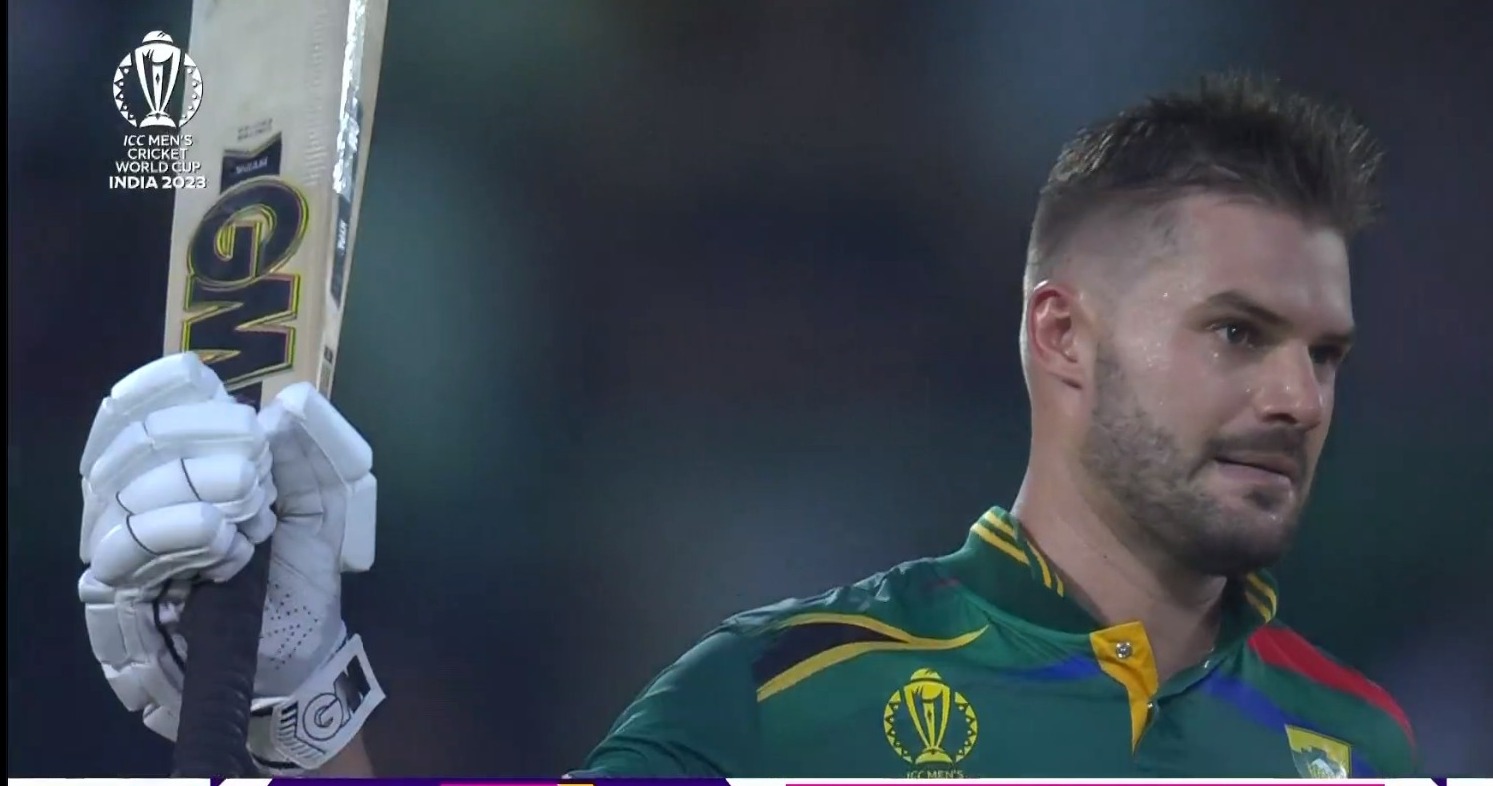
AB de Villiers: one-eyed wonder
AB de Villiers, a legendary figure in international cricket, played the latter part of his career with a significant handicap – a detached retina in his right eye. This revelation came as a shock to many, considering the high level of performance he maintained despite the injury. His career, marked by exceptional batting skills, spanned various formats, including T20 franchise cricket, post his retirement from international play in 2018.
The injury, a result of a domestic accident involving his child, led to a gradual loss of vision in the affected eye. Astonishingly, de Villiers continued to play at a professional level, relying heavily on his left eye. This scenario underscores not only his physical prowess but also his mental fortitude and adaptability under challenging conditions.
Apart from his on-field challenges, de Villiers also opened up about his reasons for not returning to international cricket. He cited the emotional toll of the 2015 World Cup loss and a change in team culture as significant factors. His decision to step away from the international arena was influenced by a desire to leave quietly, without fanfare, marking a humble end to an illustrious career. De Villiers’ story is one of resilience, skill, and an undying passion for cricket, making him an inspiring figure in the sport’s history.
David Teeger’s Controversial Comments and Subsequent Clearance
David Teeger, captain of the South Africa U19 cricket team, was embroiled in a controversy following his pro-Israel comments during the Absa Jewish Achiever Awards. His remarks, praising the bravery of young Israeli soldiers, coincided with heightened tensions between Israel and Hamas. This led to an investigation by Cricket South Africa (CSA) after a complaint by the Palestine Solidarity Alliance.
The inquiry, led by Advocate Wim Trengove, was a response to the sensitive nature of the comments and their potential breach of CSA’s code of conduct. However, the independent adjudication found that Teeger’s comments did not violate any rules of CSA or the Gauteng Lions, concluding that no misconduct had occurred.
CSA’s decision to refer the matter to an independent adjudicator highlighted the organization’s commitment to fairness and due process. The inquiry’s findings were accepted by CSA, which then closed the matter and refrained from further comments.
This incident underscores the complex interplay between personal beliefs, public statements, and professional conduct in the world of sports. It also reflects the challenges sports organizations face in navigating politically sensitive issues, especially when they intersect with personal expressions of players.
South Africa’s Squad Selection for India Tour
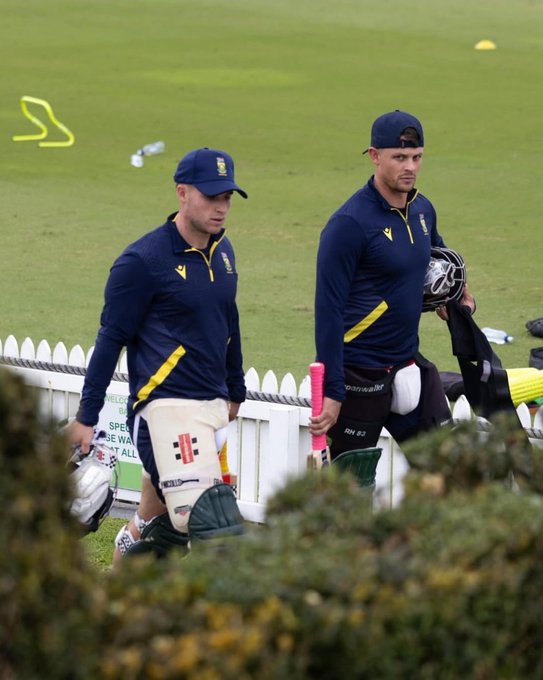
Cricket South Africa (CSA) has announced a diverse and strategic squad for their upcoming tour of India, comprising T20I, ODI, and Test matches. This selection reflects CSA’s intent to balance experienced players with emerging talents, exemplifying their approach to building a robust team for the future.
A notable inclusion in the ODI squad is 23-year-old all-rounder Mihlali Mpongwana, marking his first call-up and highlighting CSA’s commitment to nurturing young talent. However, the squad will miss fast bowler Anrich Nortje, who is still recovering from an injury.
The strategy for the tour includes a rotational policy for key players like Coetzee, Ngidi, Jansen, Rabada, and Bavuma. They will miss the third T20I to participate in First-Class cricket, ensuring exposure to different formats and maintaining form. This decision reflects a broader perspective on player development and workload management.
The tour’s schedule is packed, starting with T20Is in December, followed by ODIs and concluding with Test matches. This series is pivotal for South African cricket, as it provides an opportunity to test the team’s depth against a strong Indian side. The blend of experience and youth in the squad sets the stage for an intriguing cricketing encounter, showcasing the potential of South Africa’s evolving cricket landscape.
David Warner’s Retirement Plans and Controversy
David Warner, one of Australia’s leading cricketers, has been a subject of controversy regarding his retirement plans. His decision to announce retirement mid-series against England in the Ashes was perceived as unconventional, attracting criticism from various quarters, most notably from Mitchell Johnson, a former Australian cricket star. Johnson’s critique focused on Warner’s approach to retirement, which he deemed arrogant and disrespectful, and his involvement in the 2018 ball-tampering scandal.
Warner’s retirement announcement came amid a period of inconsistent performance, including a series of low scores in Test matches. This raised questions about his right to choose the timing of his retirement, especially in light of Australia’s lack of strong opening batsmen alternatives. Johnson contrasted Warner’s potential farewell with Steve Waugh’s retirement, which was celebrated with his iconic red handkerchief, to highlight the difference in public perception and respect.
Despite the criticism, Warner has maintained a positive outlook, focusing on ending his career on a high note. He has received strong support from his teammates, including Australian captain Pat Cummins, who emphasized the team’s protective stance towards its players. This support is indicative of the close-knit nature of the Australian cricket team and their collective resilience in the face of external criticism.
The controversy surrounding Warner’s retirement also brings to light the broader issues of sportsmanship and legacy in professional sports. It raises questions about the right of an athlete to decide their retirement, the impact of past controversies on their legacy, and the expectations of sports fans and media.
As Warner prepares for his final Test in Sydney, the Australian cricket team is faced with the challenge of finding his replacement. This situation highlights the complexities of transition in sports teams, balancing respect for a player’s contributions with the practicalities of team composition and performance.
Warner’s situation is a reflection of the dynamic and often contentious nature of professional sports, where personal decisions can become public debates. His career, marked by both exceptional achievements and notable controversies, serves as a case study in the challenges faced by sports stars in maintaining their reputation and legacy in a highly scrutinized environment.
Virat Kohli’s Uncertain Future in T20 World Cup 2024 Squad
Virat Kohli, one of India’s cricketing stalwarts, faces an uncertain future regarding his place in the T20 World Cup 2024 squad. Despite being a key player for India over the last 15 years and nearing the record-breaking achievements of Sachin Tendulkar, Kohli’s position in the team has come under scrutiny. This development comes despite his impressive performance in the ICC World Cup 2023, where he scored the highest runs in the tournament, including three centuries.
The Board of Control for Cricket in India (BCCI) is reportedly considering other options for the team’s composition for the upcoming World Cup, scheduled to be held in the United States and West Indies. This decision reflects the dynamic and competitive nature of international cricket, where even the most accomplished players are not guaranteed a spot.
In preparation for the World Cup, India’s cricketing strategy involves playing a limited number of T20 matches. This approach means senior players like Kohli, along with Rohit Sharma, Hardik Pandya, and Jasprit Bumrah, might rest during the T20 series in South Africa. The BCCI is also considering Ishan Kishan for the crucial number 3 position, a role traditionally played by Kohli. Kishan’s aggressive batting style is seen as a suitable fit for this role, indicating a shift in team strategy towards a more attacking approach in T20 cricket.
Kohli’s potential to secure his place in the team depends heavily on his performance in the Indian Premier League (IPL). However, his role in the IPL as an opener for Royal Challengers Bangalore differs from the position he would play in the national team, adding another layer of complexity to his selection.
Amidst these developments, there have been rumors about Rohit Sharma considering stepping down from the shorter formats of the game. However, BCCI sources suggest that Sharma is expected to lead India in the T20 World Cup, highlighting the evolving leadership dynamics within the team.
These developments underscore the challenging nature of team selection in high-level cricket, where strategic considerations and individual form play a significant role. Kohli’s situation, in particular, reflects the pressures and uncertainties faced by top athletes in maintaining their position at the pinnacle of their sport. As the World Cup approaches, the focus on team composition and player roles intensifies, showcasing the ever-changing landscape of international cricket.

Leave a Reply