
In the high-octane arena of the Indian Premier League (IPL), the Mumbai Indians are synonymous with success and resilience. Yet, the 2024 season has unfolded as nothing short of a calamity for this storied franchise. Traditionally a powerhouse in the league, Mumbai Indians find themselves grappling with a series of disappointing performances and mounting pressure, not just from the scoreboard but also from their vast and vocal fanbase
The season has been particularly challenging for Hardik Pandya, who took over the captaincy from Rohit Sharma in a bid to invigorate the squad and alleviate the pressure on Rohit, allowing him to focus on his batting. Despite the strategic shift, the desired turnaround in the team’s fortunes has been elusive. Pandya, a dynamic all-rounder known for his aggressive batting and sharp bowling, has himself faced intense scrutiny both for his leadership and his form.
A defining moment of the season came during a crucial match against the Chennai Super Kings. Mumbai’s chase faltered dramatically; Pandya was dismissed for a paltry 2 runs off 6 balls, exacerbating an already dire situation where the asking rate had ballooned from just under 13 to nearly 17. Earlier in the game, he had conceded 26 runs in the last over, including three successive sixes to MS Dhoni, setting up Chennai for a 20-run victory despite a heroic 105 not out from Rohit Sharma.
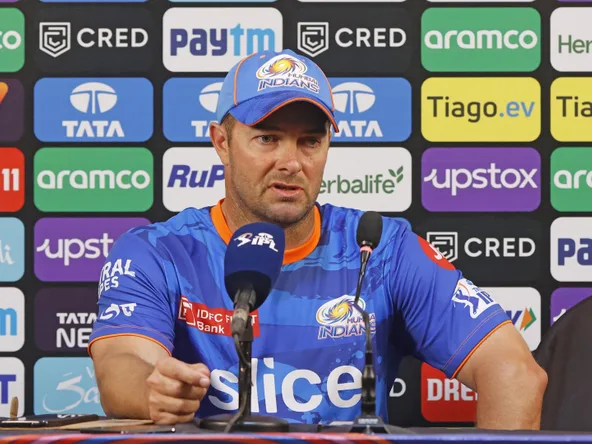
These moments of failure have not only led to criticism of Pandya but also put a spotlight on the coaching staff, particularly head coach Mark Boucher and batting coach Kieron Pollard. In cricket, as in many sports, when a team underperforms, the coach often becomes a focal point for critique, seen as the architect of strategy and thus responsible for both its successes and failures.
Under Boucher’s tenure, the team has struggled to replicate the success of previous years. Despite having a squad rich in talent and experience, the Mumbai Indians have not found their rhythm this season, leading to a palpable sense of frustration among fans. Boucher, a respected figure in cricket, has made significant contributions to the sport but now faces the daunting task of recalibrating his team’s strategy mid-season.
Pollard, for his part, has come to the defense of the under-fire captain, urging patience and emphasizing the cyclical nature of form in cricket. “In cricket, you have good days and bad days,” Pollard remarked in a post-match interview, adding that “it’s high time we try to encourage and stop nitpicking and see if we can get the best out of one of the great allrounders India has produced.”
Despite these defenses, the atmosphere surrounding the team remains charged. Every loss, every misstep on the field is followed by intense scrutiny and criticism, often playing out vehemently across social media platforms. This digital arena becomes a battleground where fans express their discontent, dissecting every decision made by the coaching staff.
The role of a coach in cricket, while not as front-and-center as in sports like football, is nonetheless crucial, especially during a crisis. Wisdom at key stages of the game can significantly alter outcomes, and the lack thereof can be glaringly apparent, as seen in several strategic missteps this season. The recent misunderstanding about a strategic timeout during the match against Chennai is indicative of the larger issues at play—miscommunication and mismanagement, symbols of a team struggling to find its bearings.
As the Mumbai Indians navigate this tumultuous season, they are at a crossroads. The pressure is not just to perform but to perform spectacularly, to live up to the legacy of a team that has been at the pinnacle of Indian cricket. For Boucher and his coaching staff, the challenge is to harness this pressure and transform it into a catalyst for change. They must find a way to stabilize the ship, utilizing their collective experience and strategic acumen to steer the team back to its winning ways.
In sports, the path to redemption is often through unity and resilience. The Mumbai Indians, with their backs against the wall, must rally not only as a team but also as a franchise, understanding that while changing a coach might offer a temporary respite, it is not a panacea for deeper systemic issues. The season is not over yet, and in the IPL, fortunes can change quickly. For Mumbai Indians, the journey ahead is about restoring faith, both within the team and among their legion of supporters, hoping to turn a season of strife into a testament to their enduring spirit.


Leave a Reply