
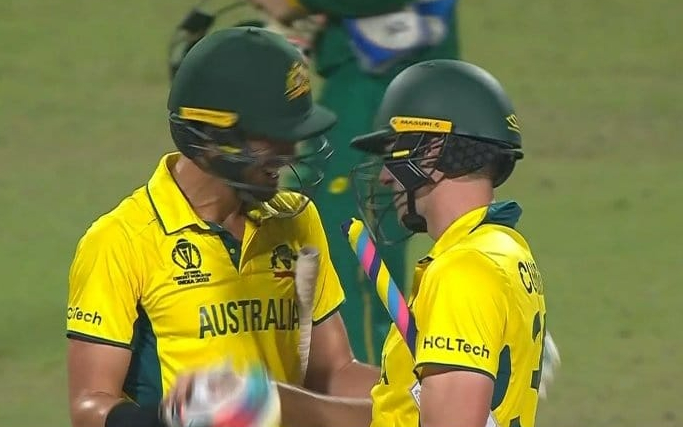
In the world of sports, there are narratives so frequently repeated they almost become gospel. In football, it’s often said that after 90 minutes of play, the Germans emerge victorious. In cricket, a similar adage could be applied to the Australians, known for their formidable and often unbeatable presence. However, in a recent encounter that will be etched in the annals of cricket history, South Africa’s performance against this cricketing powerhouse defied all odds.
From the outset, South Africa’s start was less than ideal, both with the bat and ball. The innings unfolded as a series of catch-ups, a game where each moment seemed to push them further back. Dropped catches and half-chances that didn’t go to hand haunted the Proteas, an all-too-familiar scenario replaying.
Yet, this Australian team was not the unshakeable force of Steve Waugh’s or Ricky Ponting’s era. They were fallible, vulnerable in a way that their predecessors rarely were. South Africa, resilient and unyielding, refused to allow them an easy path to victory.
In a twist of fate or perhaps poetic justice, the target set for victory, 213, mirrored the score of what was for many years considered the greatest One-Day International (ODI) match ever played. This game, much like the classic of 1999, found its rhythm and drama largely through the efforts of the spinners. Keshav Maharaj and Tabraiz Shamsi spun a web around the Australian batsmen, not with excessive turn but with a cunning that seemed to give the ball a will of its own.
Their spell was a masterclass in pressure-building, creating a suffocating environment where the Australians struggled to find breathing space. The key dismissals of Travis Head, Marnus Labuschagne, and critically, Glenn Maxwell for a duck, shifted the game’s momentum. At 137 for 5, Australia was teetering, the ghosts of their past vulnerabilities seemingly resurrecting.
The game’s ebb and flow were dramatic. South Africa, having recorded their lowest 10-over score in 15 years of ODI cricket, found themselves at a dismal 18 for 2. The team, known for explosive starts, was muted, their usual flair and aggression conspicuously absent. Only David Miller seemed immune to the pressure, carving out a lone stand of 101 for 1. The rest of the lineup crumbled, leaving South Africa with a precarious total.
The chase was equally fraught with tension. South Africa’s first boundary came off a laborious 52 balls, a stark contrast to Australia’s immediate aggression. Marco Jansen’s expensive delivery and Reeza Hendricks’ dropped catch of Head, who then swiftly racked up a half-century, seemed to signal a familiar script. The specter of past knockout failures loomed over Eden Gardens, almost palpable in the air.
But Shamsi, with a spirit of defiance, turned the tide. His dismissal of Labuschagne and the crucial wicket of Maxwell, particularly with a delivery that defied expectation, breathed life into the South African hopes. His celebration, a triumphant run around the square, was matched by Temba Bavuma’s bright-eyed fervor.
The game, however, took another turn. Despite their valiant effort and a display of grit and determination that could have scripted a different ending, South Africa ultimately fell short. The loss, while heartbreaking, was not without its silver linings. It was a testament to their ability to challenge the mightiest, to stand tall in the face of overwhelming odds, and to remind the world that in cricket, as in life, the underdog’s day may just be around the corner.
As the Proteas walked off the field, there was disappointment, undoubtedly, but also a sense of pride. They had stood up to the challenge, played with heart, and left an indelible mark on the game’s history. The ghosts of knockouts past may not have been vanquished, but they were certainly shaken. In a game where the outcome is often predetermined by historical dominance, South Africa had shown that the spirit of competition burns bright, and on any given day, anything is possible


Leave a Reply