
In the competitive arena of international cricket, the role of a captain is both prestigious and challenging. This is a journey well-known to Temba Bavuma, the current ODI captain of the Proteas, South Africa’s national cricket team. His recent performance in the World Cup in India has been a subject of intense discussion among cricket enthusiasts and experts alike.
Bavuma’s stint at the World Cup was marked by a series of ups and downs. With a total of 145 runs across eight matches, he averaged 18.12, complemented by a strike rate of 73.60. These figures, though modest, only tell part of the story. In the high-pressure environment of international cricket, every decision and every run contributes to the narrative of a player, especially a captain.
The semi-final match against Australia, in particular, placed Bavuma under the microscope. His approach and decisions during this crucial game, which resulted in a three-wicket defeat for the Proteas, sparked considerable debate among fans and critics. Leadership in sports, especially in a team game like cricket, is often dissected in the public eye, and Bavuma’s strategies were no exception.
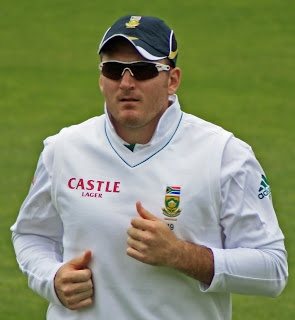
Graeme Smith, a former Proteas captain and a respected figure in the cricketing world, shared his insights into the challenges faced by Bavuma. Speaking at the SA20 50-day tournament launch at Newlands, Smith highlighted the relentless nature of professional cricket, especially for those in leadership roles. He emphasized that a captain is not only responsible for their personal performance but also bears the weight of the team’s overall success and failures.
Smith’s perspective sheds light on the nuanced role of a captain. It’s not just about personal performance but also about being the face of the team, handling scrutiny, and making tough decisions under pressure. Smith noted that criticism and scrutiny are part and parcel of the captaincy, and how one responds to these challenges can define their tenure.
Smith also pointed out that setbacks could be transformative. For Bavuma, this period is not just about introspection but an opportunity to demonstrate resilience and leadership. It’s about taking responsibility, learning from experiences, and using them as a foundation for growth and improvement.
The Proteas’ journey in the World Cup, particularly their match against Australia, was a testament to the fine margins that often decide the outcomes in cricket. Smith acknowledged that while the team fell short in terms of runs and might have missed a few strategic opportunities in the field, the intense nature of the game was evident. He expressed a sense of disappointment but also hinted at the potential for learning and evolution that such experiences bring.
In conclusion, Bavuma’s current phase as the Proteas ODI captain is more than a story of numbers and statistics. It’s about the journey of a leader under the spotlight, facing challenges, and the potential for growth that lies in responding to these situations. His path forward will be closely watched by cricket fans and experts, as it will not only define his legacy but also contribute to the narrative of South African cricket


Leave a Reply