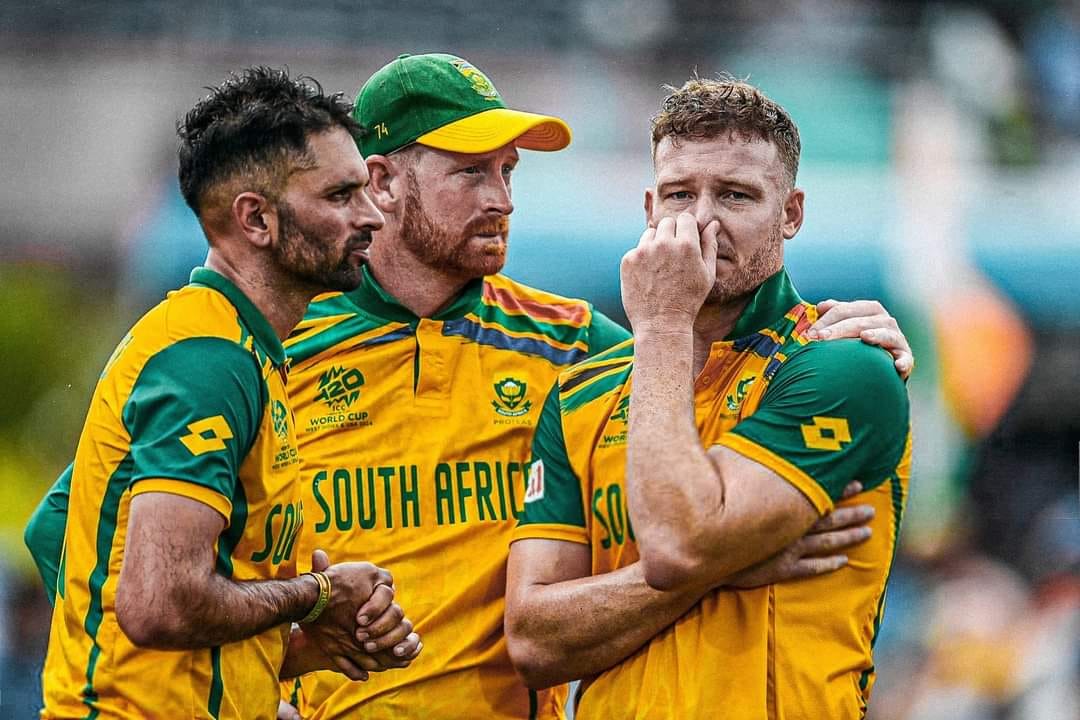
In the story of international cricket, South Africa’s ongoing ICC tournament drought stands as a bewildering narrative of missed opportunities. Since their triumph at the ICC Champions Trophy in 1998—a year that could be considered the pinnacle of South African ODI cricket—the Proteas have not managed to secure any ICC trophies. This statistic becomes even more perplexing when you consider that there have been 24 ICC tournaments since then. That’s nearly a tournament every year, providing the team with ample opportunities to clinch a title.
To draw a parallel, in the realm of tournament football, The Netherlands are often mentioned in a similar context. Despite their reputation, the Dutch boast a victory at the 1988 Euros and have reached three World Cup finals. In comparison, the Dutch only get a shot at glory every two years, alternating between the World Cup and the Euros. Likewise, Ireland’s rugby team is legendary for not advancing past the Rugby World Cup quarter-finals, a tournament held only every four years, making each opportunity precious. In contrast, the Proteas find themselves with a chance to win big every fourteen months on average.
This frequency of opportunities should be an advantage, but it instead highlights the consistent underperformance of South Africa on the world stage. However, as the Marvel character Thanos aptly said, “now is no time to mourn.” Looking ahead, the 2025 Champions Trophy looms just seven months away. With the exception of Quinton de Kock, who has retired from 50-over cricket, it is expected that Proteas coach Rob Walter will largely retain the current squad, welcoming captain Temba Bavuma back into the fold.
Despite narrow losses in their recent outings—falling to Australia and India by slim margins—South Africa is poised to enter the Champions Trophy as one of the favorites. The team boasts a robust bowling lineup with at least three pace options and multiple spin threats capable of adapting to various conditions. This versatility is something other nations often lack, relying too heavily on either batting prowess or favorable conditions, which tend not to dictate outcomes in the critical stages of tournaments.
Yet, there are undeniable challenges that need addressing. Reeza Hendricks, despite his prior form, failed to translate his performances to the World Cup stage, raising questions about his viability at 35. Temba Bavuma’s return is also under scrutiny after a disappointing showing in his last tournament appearance.
Further concerns arise with younger players like Marco Jansen, whose potential is vast, yet his performance in crucial matches raises doubts. His expensive overs in the World Cup semi-final and his minimal run contributions are points of worry. Similarly, the role of Tabraiz Shamsi, South Africa’s second spinner, is up for debate. While Shamsi can be dominant against mid-tier batsmen, his effectiveness wanes against the top echelon, coupled with his inability to contribute with the bat—a stark contrast to the all-rounder options like those of Australia and India, who provide depth in batting as well as bowling.
As South Africa prepares for the upcoming Champions Trophy, the team must critically evaluate its composition and strategy. The last two defeats in knockout stages underscore a glaring issue: the lack of lower-order batting strength. Adjusting this could be pivotal in changing the team’s fortunes. It’s not just about maintaining a strong starting lineup but also ensuring that every player can contribute significantly under pressure, which could be the key to ending the long wait for another ICC trophy.
In essence, as the Proteas gear up for another shot at glory, the blend of seasoned players and emerging talents must be optimized. The road ahead is challenging, but with thoughtful preparation and strategic adjustments, South Africa can aspire to reclaim their position at the pinnacle of international cricket.


Leave a Reply