

Selection surprises are part of international cricket, but South Africa produced one of their biggest in naming Jason Smith in the T20 World Cup squad with just five international caps to his name. The decision immediately raised eyebrows, not least because Smith was preferred over Tristan Stubbs, a player with IPL pedigree and experience in Indian conditions.
On the surface, it looks like a gamble. Dig a little deeper, and it begins to look like something else entirely: a calculated vote of trust.
Why Smith, Why Now?
Stubbs’ omission is not without context. In seven T20Is this year, he has failed to pass 40 and has struggled for consistency across formats. That has opened the door, and Smith has walked through it — not on hype, but on a body of domestic work that has quietly gathered momentum.
Smith is 31, a late bloomer by international standards, and a cricketer who has had to grind for relevance. After spending most of his career in the Western Cape, he is now based in Durban and has built a reputation as a versatile batting option who can float through the order. That versatility was cited explicitly by selection convenor Patrick Moroney, who picked the squad alongside coach Shukri Conrad.
Conrad, by now, has a clear pattern. He backs players he trusts — sometimes ahead of those with louder reputations — and he is unafraid of left-field calls if he believes a player can deliver when it matters.
The Numbers Behind the Pick
Smith’s career T20 record does not leap off the page: 97 matches, an average of 29.06, and a strike rate of 127.92. Solid, but hardly irresistible. The key, however, lies in trajectory rather than totals.
Over the past two years, Smith’s power-hitting has taken a clear step forward. His strike rate has climbed north of 140, and in the most recent CSA T20 Challenge it spiked dramatically to 196.05. One innings in particular — a 19-ball 68 for the Dolphins against a seasoned attack — was highlighted by CSA as a defining performance in his selection case.
That knock did not emerge from nowhere. Nearly half of Smith’s career sixes and 40% of his fours have come in the last two years, reflecting a deliberate technical and mental shift in his game.
Built, Not Fluked
Smith himself credits former South Africa batter Neil McKenzie for a technical adjustment that unlocked his power. The change was subtle: better engagement of the front shoulder, contact points closer to the body, and power generated through the hips rather than brute force.
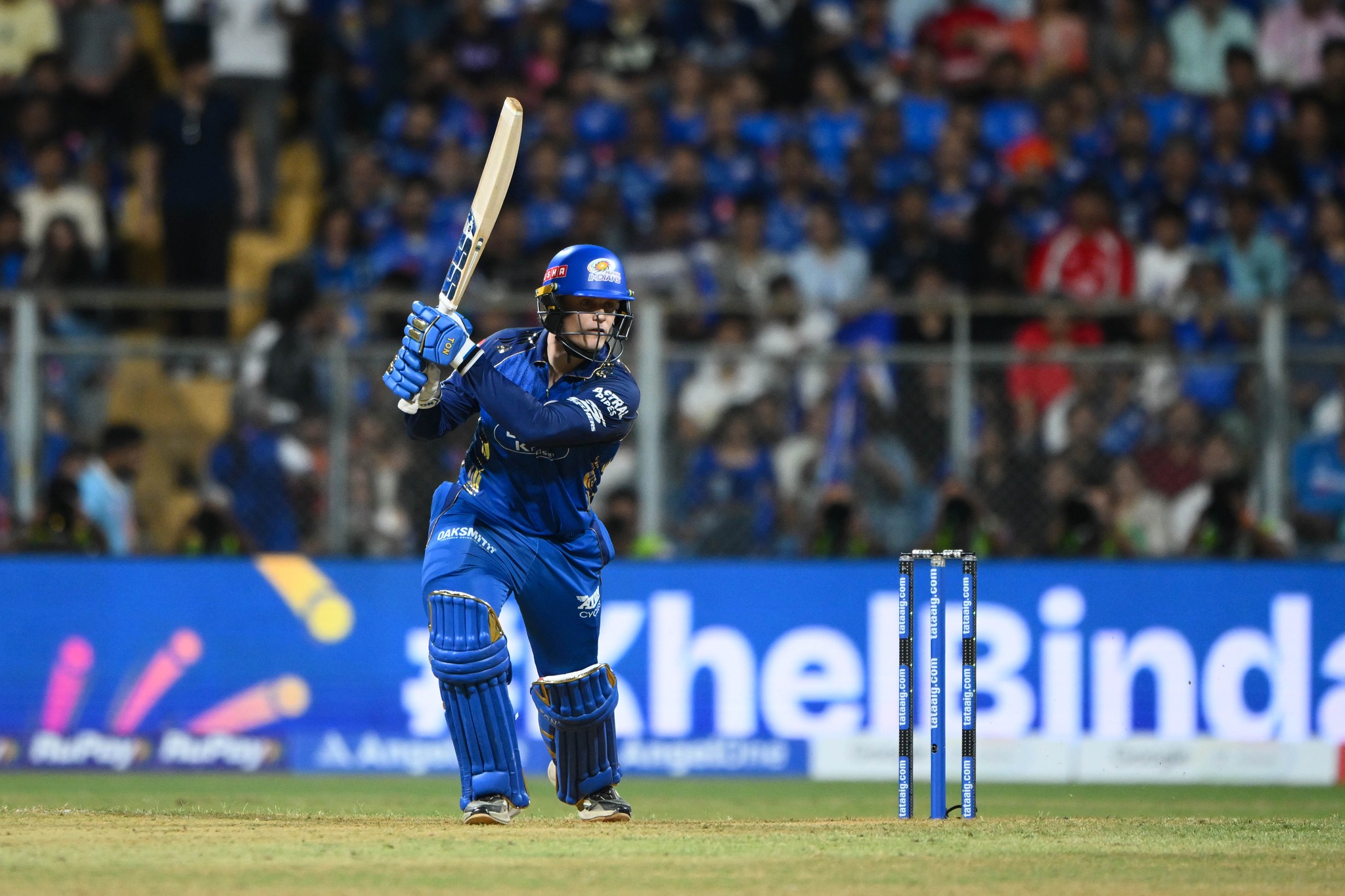
The result has been a more controlled brand of aggression — particularly evident in his recent 14-ball 41 for MI Cape Town, where he repeatedly waited for the short ball and punished it without overreaching.
This is the version of Smith South Africa are backing: not a volume scorer, but a potential impact player capable of shifting momentum in a short window.
The Questions That Remain
None of this removes the doubts.
Since his World Cup call-up, Smith has struggled for runs in the SA20, dismissed three times in single figures as MI Cape Town slipped to the bottom of the table. Scrutiny has followed quickly, amplified by the absence of Stubbs and the omission of Ryan Rickelton, who scored a century in the same match as Smith’s cameo.
There are also broader selection debates. The inclusion of the injured Tony de Zorzi, and the return of Quinton de Kock, have narrowed opportunities elsewhere. In that context, Smith has become a lightning rod for wider frustrations — fair or not.
A Long Road to This Moment
What perhaps explains Smith’s composure is the road he has travelled. A member of South Africa’s 2014 Under-19 World Cup-winning side, he is only the fourth from that group — after Kagiso Rabada, Aiden Markram, and Corbin Bosch — to reach the senior national team.
The wait was long, often frustrating, and shaped him as much personally as professionally. Where once he was relentlessly hard on himself, Smith now speaks openly about enjoying the game, finding positives in teammates’ success, and staying process-driven rather than outcome-obsessed.
That mindset may yet prove decisive.
Trust as a Selection Strategy
This is not a selection built on reputation or future promise. It is a bet on readiness — on a player who knows his game, understands his role, and is unlikely to be overwhelmed by the moment.
Whether that trust is rewarded remains to be seen. But if Jason Smith succeeds, it will reinforce a familiar Conrad principle: that in tournament cricket, reliability and mental clarity can matter as much as pedigree.
And if he doesn’t, South Africa will at least know that the gamble was made with eyes open — not on potential alone, but on belief earned the hard way.


Leave a Reply