
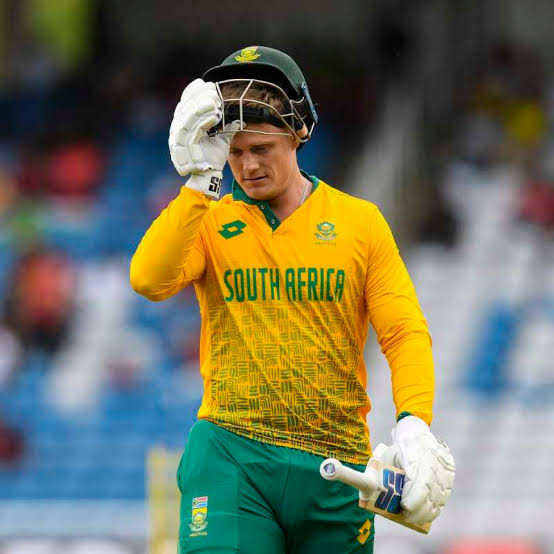
South Africa claimed a dominant eight-wicket victory over Ireland in the first T20I of the series at the Zayed Cricket Stadium, Abu Dhabi, in what was officially a home game for Ireland. However, it was the Proteas who looked more at ease, completing the highest successful chase at this venue and extending their unbeaten streak against Ireland in T20Is. The chase of 172 was achieved with 14 balls to spare, thanks to a blistering opening partnership between Ryan Rickelton and Reeza Hendricks.
The match was played in Abu Dhabi due to infrastructure and cost constraints faced by Ireland. For South Africa, the shift from Sharjah, where they had just played Afghanistan, worked to their advantage as they adapted quickly to the bounce and pace of the Abu Dhabi pitch. In contrast, Ireland appeared uncomfortable under the dewy conditions, which hampered their ability to defend a competitive total of 171/8. South Africa, having acclimatized to the Middle Eastern heat and the particular demands of the playing surfaces, executed their plans with precision, particularly in restricting Ireland during key phases of the game.
Ireland’s innings got off to a promising start, with Ross Adair, who wasn’t originally slated to play, coming in for the injured Lorcan Tucker. Adair wasted no time, slamming Lizaad Williams for boundaries early on. However, his aggressive approach led to his downfall as he attempted one big shot too many, caught at long-on off Wiaan Mulder’s bowling for 18 off 10 balls. South Africa capitalized on this breakthrough, as Ottneil Baartman then bowled Paul Stirling for just 2, leaving Ireland struggling at 26/2 inside the powerplay.
Despite these early blows, Ireland fought back through Curtis Campher, playing his 100th international match, and Neil Rock. The pair stitched together a 59-run partnership, with Campher showcasing his composure and ability to find the gaps. His knock of 49 off 36 balls was pivotal in keeping Ireland afloat, as he mixed calculated boundaries with clever singles. Rock, too, contributed with a steady 37 off 28 balls, but Ireland’s inability to maintain momentum, coupled with South Africa’s tight fielding, meant that they couldn’t fully capitalize on the platform set by their middle order.
South Africa’s bowling was led by Patrick Kruger, whose brilliant spell of 4/27 broke Ireland’s back during the death overs. Kruger removed Campher, George Dockrell, Fionn Hand, and Mark Adair in quick succession, preventing Ireland from accelerating towards a bigger total. Though Ireland posted 171, the score seemed below par given the conditions and the form South Africa’s top order had displayed in recent games.
In response, South Africa’s opening pair of Ryan Rickelton and Reeza Hendricks set the tone early. Rickelton, who was named Player of the Match for his 76 off 48 balls, played with aggressive intent from the outset. His six sixes, mostly hit high over the leg-side boundary, helped South Africa reach 50 within the first six overs. Hendricks, on the other hand, played more classical strokes, driving fluently through the off-side as he notched up 51 off 33 balls, his first half-century in 15 T20I innings.
The pair added 136 for the first wicket, South Africa’s highest opening partnership away from home in T20Is. Both openers fell within two overs of each other, but by then, South Africa had nearly sealed the match. Matthew Breetzke (19*) and captain Aiden Markram (17*) completed the formalities, reaching the target with ease and keeping South Africa in control throughout the chase.
Ireland’s bowling attack failed to contain South Africa’s openers, with Fionn Hand conceding 38 runs from three overs and Ben White going for 35 runs in the same number of overs. While Craig Young (1/25) and Mark Adair (1/31) picked up wickets, they couldn’t halt South Africa’s march toward victory. The dew also played a role in making bowling and fielding difficult for Ireland, as misfields and wet balls hampered their efforts in the latter stages.
For South Africa, the win was a confidence boost as they adapted to the conditions better than their opponents. Ireland, despite their resilience with the bat, will need to tighten their bowling plans and improve their fielding to bounce back in the next game.


Leave a Reply