
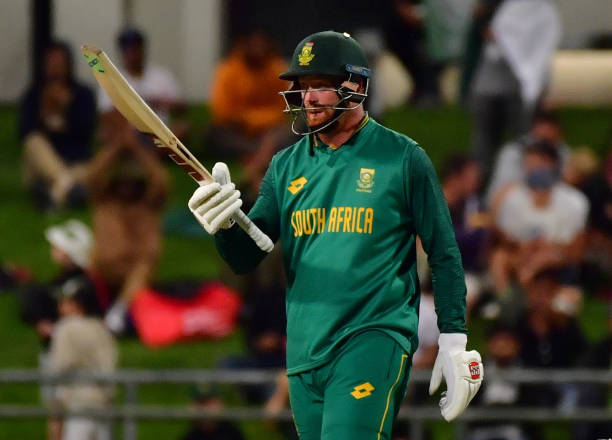
When Cricket South Africa (CSA) released its 2025–26 central and hybrid contract list, the absence of Heinrich Klaasen’s name raised more than a few eyebrows. The wicketkeeper-batsman has been one of the Proteas’ most explosive white-ball players over the last two years — capable of turning matches with a handful of brutal overs. His omission wasn’t due to form or fitness. It was a business decision. And it tells us a lot about the changing dynamics between players and national boards.
According to Rapport, Klaasen remains in negotiations with CSA. The sticking point appears to be his desire for greater scheduling autonomy — specifically, the freedom to play in all four of the world’s biggest T20 leagues: the Indian Premier League (IPL), SA20, The Hundred in England, and Major League Cricket (MLC) in the USA. That quartet of tournaments increasingly defines the modern T20 calendar, and for a player like Klaasen — who thrives in the high-pressure, high-payout franchise environment — the appeal is obvious.
The Proteas are set to play a significant amount of white-ball cricket this season, with many of their fixtures either overlapping with or falling soon after these leagues. And while CSA’s hybrid contracts were introduced to allow for this growing duality — permitting players to miss select tours while committing to key ICC events — even that model may be too restrictive for Klaasen.
Consider his schedule: IPL with Sunrisers Hyderabad (15 March – 31 May), MLC with the Seattle Orcas (13 June – 14 July), The Hundred with Manchester Originals (5 – 31 August), and the SA20 with Durban’s Super Giants (26 December – 26 January). That’s four high-paying leagues across four continents. Financially and logistically, it’s a demanding slate — and CSA’s current central contract model, which maxes out at R4.5 million (with commercial bonuses potentially pushing it to R8 million), doesn’t stack up when Klaasen reportedly earns R48 million from the IPL alone.
In this light, Klaasen’s hesitation isn’t about disloyalty — it’s about leverage.
He wouldn’t be the first South African to eschew a national contract. Both Quinton de Kock and Anrich Nortje played in the 2024 T20 World Cup without formal CSA deals. And CSA itself has acknowledged the need for flexibility. As director of cricket Enoch Nkwe said, the new contract structure is meant to “provide players the opportunity to contribute during specific bilateral tours and ICC events.”
That arrangement may yet work for Klaasen. His non-inclusion on the contract list isn’t necessarily a severing of ties — it might simply be a holdout for better terms. Reports suggest a final decision will be made within two weeks, and negotiations remain open.
But even if Klaasen never signs another CSA deal, it doesn’t mean we’ve seen the last of him in a Proteas shirt. The age of the year-round international cricketer is ending. We are now in the era of the global T20 freelancer — and Klaasen, arguably the most impactful non-Indian player on the circuit today, is leading the charge.
This isn’t a crisis. It’s a recalibration. And it may well define the next decade of South African cricket.


Leave a Reply