
For most of its history, cricket has had a villain.
Not a villain in the moral sense. Cricket’s “evil empire” is something more theatrical than that. It is the team that seems to have everything: the money, the players, the trophies, and the aura that makes other nations sigh when they see the fixture list.
Every sporting ecosystem tends to produce one.
In baseball, the United States plays that role internationally. In basketball it is even more obvious; when the Americans assemble a full-strength Olympic squad, the rest of the world is essentially competing for second place. In rugby union, at this moment in time, the Springboks occupy something close to that space. They are back-to-back world champions, brutally efficient, and stylistically built to grind opponents into submission.
For a long time in cricket, the evil empire was Australia.
From the late 1990s into the mid-2000s, Australia were less a cricket team than a machine. They dominated the Ashes, won consecutive World Cups, and assembled line-ups so strong that great cricketers from other nations often looked ordinary against them. In 2003 they ticked every box imaginable. Financial strength, overwhelming on-field success, a conveyor belt of talent, and an aura that made opponents uneasy before the first ball was bowled.
Seeing Australia on the schedule felt like receiving a summons.
That sense of inevitability is what defines a sporting empire. And lately, India have begun to drift into that territory.
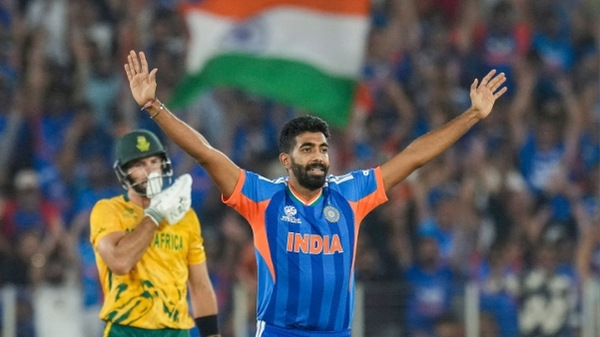
The thought really crystallised when India defended the T20 World Cup, becoming the first team to retain the trophy and the first to win three in total. T20 cricket, by design, is supposed to produce chaos. The format is volatile, margins are thin, and short tournaments often produce unlikely champions.
Yet India have managed to impose order on the chaos.
There is no official checklist for becoming the evil empire of a sport, but history suggests there are a handful of markers.
The first is financial dominance.
On this front India are already miles ahead of everyone else. The Indian market now drives the economics of global cricket. Broadcast rights, sponsorship deals, and the gravitational pull of the IPL have fundamentally reshaped the sport. When cricket boards negotiate revenue distributions or international schedules, India’s influence sits at the centre of the conversation.
Financial dominance alone does not make an empire, but it helps create the conditions for one.
The second marker is on-field success.
India’s case here is growing stronger every year. Three consecutive T20 World Cups is not just success; it is unprecedented dominance in a format designed to level the playing field. Tournament cricket rewards adaptability and depth, and India are beginning to demonstrate both.
The third marker is the prospect of continued success.
Empires are not built on a single generation. They are built on the sense that the next wave is already arriving.
India’s pipeline looks frighteningly healthy. Abhishek Sharma, now 25, is already an established white-ball force. Tilak Varma, still only 24, has emerged as one of the most composed young batters in world cricket. Yashasvi Jaiswal is also just 25 and already producing performances that suggest a long and productive international career.
And hovering above all of that is the hype around a 14-year-old prodigy who many in India believe could become the next great superstar.
When a country of 1.4 billion people combines that demographic depth with the strongest domestic structures in the sport, the long-term outlook becomes obvious.
The fourth marker of an evil empire is irritation.
True sporting empires tend to annoy people. Not because they cheat or behave badly, but because they win so often that their success begins to feel excessive. Opponents start looking for explanations. They talk about resources, scheduling advantages, or political influence.
Australia experienced this phenomenon in the early 2000s. Their excellence produced admiration but also resentment.
India are beginning to inspire similar reactions.
The fifth marker is fear.
When the empire appears on the fixture list, the reaction is instinctive. Players feel it. Fans feel it. There is a quiet recognition that this is the match that could derail a tour.
India are not quite there yet across all formats, but in white-ball cricket they are getting very close.
Yet for all their momentum, the crown may still belong to Australia.
The reason is Test cricket.
India’s recent Test form has been uneven by their own standards. Losing five of the last seven home Tests is not the kind of statistic associated with a full-blown empire. Dominating the longest format still carries a particular authority in cricket, and Australia continue to hold that ground.
Since the Ashes, Australia have played 24 Tests, winning 18 and losing only four. That is a win rate of 75 percent, a number that places them firmly among the strongest Test sides of the modern era. They remain formidable at home, highly competitive away, and still custodians of the Ashes — arguably the most storied prize in Test cricket.
They also remain the reigning ODI World Cup champions.
So while India may be building something enormous, Australia still resemble the sport’s current heavyweight.
For other nations, even dreaming of this kind of dominance feels distant.
Take South Africa. The Proteas have produced extraordinary cricketers and unforgettable moments, but becoming the sport’s evil empire has never really been on the table. South Africa operate with a fraction of the financial resources, a much smaller playing population, and far less structural support than the big three.
South Africa’s cricketing identity has historically been built on punching above its weight rather than ruling the sport. The Proteas have often been competitive, occasionally brilliant, but rarely positioned to dictate the global balance of power.
In other words, South Africa can only dream of becoming cricket’s evil empire.
India, by contrast, may be on the verge of claiming the title.
And here lies the final, perhaps most unsettling thought for the rest of the cricketing world: if India do become the sport’s great Beelzebub, it is hard to imagine them relinquishing the role.
Unlike previous empires, India’s power is structural.
Their population is enormous. Their domestic system is vast. Their financial dominance appears permanent. The IPL alone generates a level of investment and professionalisation that other cricketing nations simply cannot match.
Australia’s golden generation eventually aged. The West Indies’ dominance eventually faded. Even England’s bursts of supremacy have tended to come and go.
India’s rise feels different.
When a country that large, that wealthy in cricketing terms, and that deep in talent finally aligns its resources with sustained success, history suggests the result can last a very long time.
Which means the rest of the cricketing world might want to start getting comfortable with the idea.
Because the evil empire may not just be arriving.
It may be here to stay.


Leave a Reply