
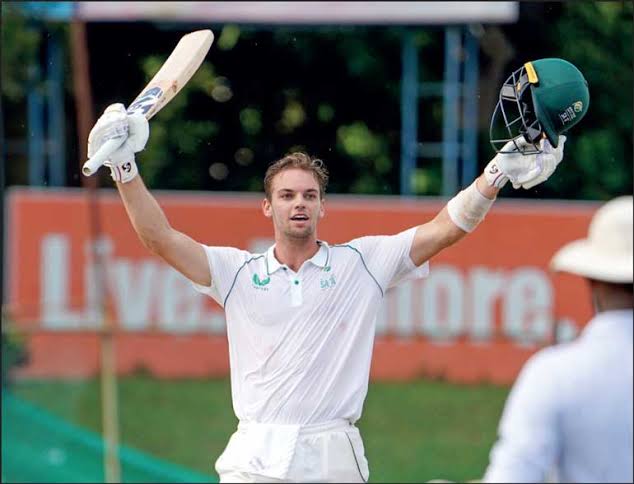
South African cricket fans have had a long wait to see their Test batting lineup show true solidity, but recent performances in Bangladesh suggest that this might be the start of a promising era. Since May 2018, South Africa’s batting has been in a rough patch, with only the West Indies posting a lower average runs-per-wicket figure among World Test Championship teams. South Africa’s batters have also scored the fewest hundreds during this period. This is a team that has struggled to hold its own with the bat, especially overseas. However, in the Chattogram Test, South Africa not only posted their highest away total in 12 years but also saw three players—Tony de Zorzi, Tristan Stubbs, and Wiaan Mulder—reach their maiden Test centuries. This shift in form has been about a year in the making, but in the last two weeks, it seems to be taking shape in an exciting way.
The foundation for South Africa’s improved batting performance can be traced back to the arrival of Shukri Conrad as Test coach last year. His approach to building a young but determined lineup began in earnest during the challenging home series against a strong Indian team in the 2023-24 season. Though still developing, the Proteas began to show glimpses of grit and adaptability in that series, with different players stepping up in various situations. Since then, players like de Zorzi, Stubbs, and Mulder have gained experience and matured through both domestic and international cricket. Conrad has provided these players with a structure that allows them to bring their unique skills to the table, and the team seems to have found the right balance in its batting order. Now, South Africa appears to have a steady opening partner for Aiden Markram, a competent No.3 in Stubbs, a middle order that can handle spin, and an allrounder in Mulder who adds depth to the lineup.
Tony de Zorzi has been a standout example in this development. After starting his career for Northerns and eventually moving to the Titans and Western Cape, de Zorzi has shown significant improvement in his batting. His impressive 177 in the Chattogram Test is the highest individual score by a South African away from home since Graeme Smith’s 234 in Dubai in 2013. Technically, he demonstrated an ability to adapt to spin-friendly conditions, and mentally, his capacity to withstand long hours at the crease was remarkable. Battling cramps in his hand, forearm, side, and legs, de Zorzi batted for over seven hours, a performance that demonstrated his physical and mental toughness. Drawing on his experience in South Africa’s domestic competition, where he averaged 101.40 in the 2022-23 season, de Zorzi showed the patience and focus that could make him a staple of South Africa’s batting for years to come.
Wiaan Mulder has had a similar journey. He debuted in Test cricket back in 2019 but initially struggled to cement a regular place in the team. Often batting lower down the order behind stalwarts like Hashim Amla, Faf du Plessis, and Quinton de Kock, Mulder’s role was never fully defined. Since then, he has worked on his game, particularly with stints in England, where he batted at No. 6 for Leicestershire and scored two hundreds, including a career-best 235 not out. His efforts paid off, as he was promoted to No. 5 in South African domestic cricket, averaging over 50 last season. Mulder’s recent innings in Chattogram was well-paced and showed the hard-hitting ability he has added to his game, including a couple of sixes that pushed South Africa’s score past 500. For Mulder, this performance marks a high point, and he has expressed that this is precisely what he dreams of as a Test cricketer.
Then there’s Tristan Stubbs, who in just his second Test, scored his first century. Promoted to No. 3 by Conrad after only one Test, Stubbs has shown remarkable adaptability and maturity for a player with only 15 first-class games before his Test debut. Guided by batting coach Ashwell Prince, who has recent coaching experience in Bangladesh, Stubbs has quickly developed an understanding of playing in subcontinental conditions. His century between those of de Zorzi and Mulder highlights his potential and validates Conrad’s bold decision to give him the responsibility of batting at one-down. Stubbs, like Mulder, credited Conrad and Prince for giving him confidence and helping him make an early impact in Test cricket.
One of the most encouraging aspects of South Africa’s recent batting revival is that all three centurions in the Chattogram Test—de Zorzi, Stubbs, and Mulder—are under the age of 30. This is not only a testament to the depth of talent emerging in South African cricket but also an indication that this lineup could form a strong batting core for years to come. And while Bangladesh may not be the toughest opponent, they are certainly no pushover, having recently drawn a series in New Zealand and whitewashed Pakistan in Pakistan. South Africa’s ability to dominate in these conditions, which have traditionally been challenging for them, is a positive step forward.
While it would be unfair to expect this young lineup to immediately emulate the successes of past South African greats like Jacques Kallis, AB de Villiers, and Hashim Amla, they have shown the potential to be competitive. If South Africa’s batters can provide their bowlers with enough runs to work with, they could soon find themselves becoming a more formidable team in Test cricket. The recent performance suggests a balance that has been missing in South African cricket for some time. With Bavuma, arguably their best batsman, still to return to the lineup, there is further reason for optimism. If this young team can continue to build on their successes and refine their approach, South African cricket may indeed be on the brink of a new, exciting era.
With a chance to qualify for the World Test Championship final, South Africa’s fate is now in their own hands. The Proteas are four wins away from the final, and if they continue on this upward trajectory, they could well find themselves challenging for the coveted Test mace once again.


Leave a Reply