
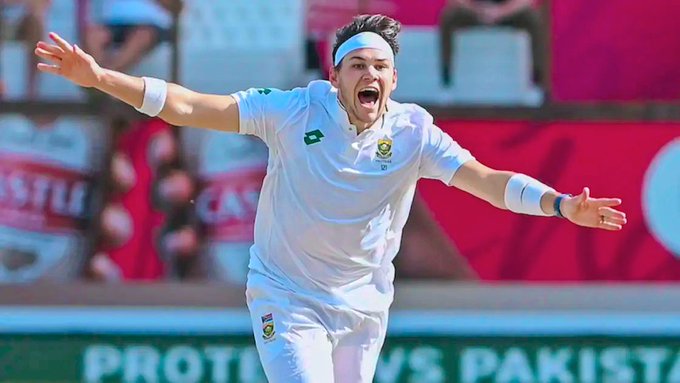
South Africa’s bowling resources are under scrutiny as they prepare for the second Test against Sri Lanka in Gqeberha on December 5. Gerald Coetzee, who played a pivotal role in South Africa’s 233-run victory in the first Test, is a doubt after experiencing a groin niggle during the Durban Test. This concern is compounded by the ongoing shortage of pace bowlers in the squad, raising questions about the depth of South Africa’s fast-bowling reserves.
Coetzee’s Groin Injury: A Familiar Concern
Coetzee’s groin niggle is particularly worrying given his history with a similar issue earlier this year during South Africa’s series against India. On that occasion, Coetzee struggled to complete his spells, and his recovery required significant time away from competitive cricket. Groin injuries are notoriously tricky for fast bowlers, as the explosive movements required to deliver the ball put immense strain on this area.
In Durban, Coetzee bowled in short bursts, raising alarms about his fitness. After a three-over opening spell, he managed just two overs in his second burst during Sri Lanka’s resistance led by Dhananjaya de Silva and Dinesh Chandimal. Post-lunch, Coetzee was strapped up and returned to bowl three overs, claiming the vital wicket of Chandimal, but his reduced workload suggests the groin issue limited his effectiveness.
A Shrinking Fast-Bowling Arsenal
South Africa’s pace stocks are alarmingly thin. With Coetzee potentially unavailable, Wiaan Mulder already ruled out due to a fractured finger, and seasoned campaigners like Nandre Burger and Lungi Ngidi sidelined by long-term injuries, the Proteas face a selection conundrum.
Coach Shukri Conrad admitted the challenge ahead:
“We will more than likely add another player to our group.”
Dane Paterson, the only other specialist quick in the squad, could come into contention. However, the dearth of fit and available pace bowlers highlights a broader issue: South Africa is running out of frontline fast-bowling options.
Rabada and Jansen Shouldering the Load
Kagiso Rabada and Marco Jansen, the spearheads of the attack, are thankfully fit and firing. Jansen’s all-around heroics earned him the Player-of-the-Match award in Durban, while Rabada’s incisive spells were crucial in securing the victory. However, the pair cannot shoulder the burden alone.
If Coetzee is ruled out, South Africa may need to turn to less experienced or out-of-form bowlers. This lack of depth starkly contrasts with the golden era of South African cricket, when players like Dale Steyn, Morne Morkel, and Vernon Philander formed one of the most formidable pace attacks in the world.
Looking Ahead to Gqeberha
The second Test in Gqeberha will test South Africa’s resilience and adaptability. The team has already named top-order batter Matthew Breetzke as a replacement for Mulder, signaling that batting depth might also be a concern. Captain Temba Bavuma acknowledged the challenges ahead:
“Not a big break between [Tests]. Wiaan is out of the series, we have to find a replacement. Gerald Coetzee, the medical team will have to do their best.”
With scans on Coetzee’s groin scheduled, South Africa will anxiously await the results. His presence is crucial not only for his wicket-taking ability but also for his potential to bring much-needed variety and aggression to the attack.
Conclusion
South Africa’s victory in Durban showcased their dominance, but the potential loss of Coetzee and the dwindling pool of pace options underline a pressing concern for the team’s management. As the Proteas prepare for the second Test, their ability to overcome these obstacles will be critical. Should Coetzee miss out, South Africa’s fast-bowling bench will face its toughest test yet, exposing the need for a long-term strategy to rebuild the depth of their storied pace legacy.


Leave a Reply