
South Africa arrive at this Women’s World Cup with more cause for genuine optimism than ever before. While the path to one-day supremacy is never assured, a confluence of factors suggests the Proteas may have all the right ingredients to finally break through.
At the heart of this rise is Nonkululeko Mlaba. Across four matches, she’s taken eight wickets at an average of 17.12 and an economy rate of 4.28. For a side that historically has lacked true wicket-taking venom at the top of the innings, her control and consistency are game-changers. She is, in many ways, the straw that stirs the drink — nothing works optimally without her. Her ability to strangle scoring, tie down one end, and pick up breakthroughs gives South Africa the luxury of balance and pressure that opponents must constantly navigate.
Yet history has long haunted this team — in their last three ICC knockout defeats, the batting repeatedly failed to rise to the occasion. One can argue that the bowlers didn’t always deliver, but when push came to shove, it was the collapse of the batting order that ended the Proteas’ dreams. Globally, the sense prevailed that once you got past Tazmin Brits and Laura Wolvaardt, you were more than halfway home. The rest of the batting lineup often couldn’t keep pace.
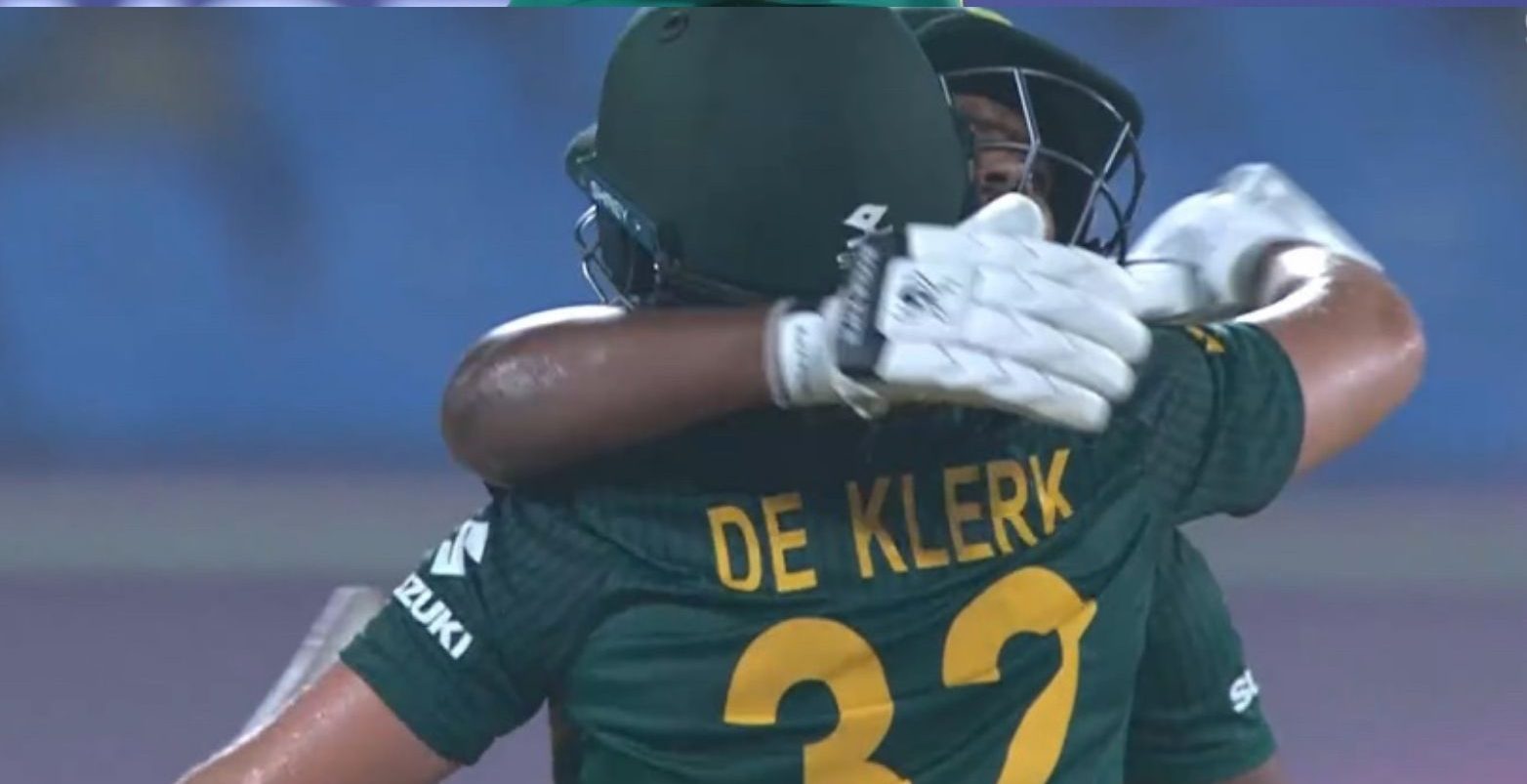
In recent tournaments, though, we’ve seen glimpses of a shift. Nadine de Klerk and Chloe Tryon have in consecutive tournaments earned player-of-the-match accolades in knockout settings. De Klerk’s half-century against India was the kind of innings that changes narratives — poised, powerful, and defiant. Tryon’s 61 against Bangladesh was another hallmark knock, working under pressure when conditions and the scoreboard were hostile. In that sense, de Klerk has seemed possessed by the spirit of ’99 Lance Klusener — unafraid in chaos, willing to absorb pressure and deliver.
It cannot be ignored that their campaign got off to a disastrous start: bowled out for 69 against England. That dramatic collapse leaves their net run rate in tatters and means they’ll have little margin for error. Any dropped game could prove fatal, because clawing back NRR will be extremely difficult given the quality of opposition ahead.
But that fragility in net run rate also reinforces how pivotal every match will be — and how much the Proteas will have to lean on Mlaba and their evolving middle order. If Mlaba continues to deliver unflinchingly, and if de Klerk, Tryon, Wolvaardt and Brits can consistently produce, this is a squad with the balance and bowls-to-bat depth to make a run.
Moreover, their plans appear smarter, more measured. They are no longer trying to outgun every opponent; instead, they are dialing in game management, pacing innings, and letting partnerships flourish. The tone is more adaptive, less vulnerable to collapse.
If South Africa can avoid a batting meltdown, cling to Mlaba’s control, and ride contributions from all corners (including the lower order), the title is within reach. This tournament could very well be their moment — when history bends and the Proteas finally claim the crown they’ve long chased.


Leave a Reply