
This South Africa vs Australia Test series has, at times, been a rather uneven affair. South Africa entered the series having not played a Test match in nearly a year, while Australia, seemingly determined to level the playing field, were experimenting with selecting players who hadn’t played red-ball cricket in just as long.
For all the billing that comes with a contest between the number one ranked side in the world and the reigning World Test Champions, the cricket hadn’t always lived up to the occasion. There had been moments of brilliance, certainly, but also periods when the rustiness of both sides was rather difficult to ignore.
But yesterday, in front of a near-capacity crowd at Newlands, it finally did.
For the first time in the series, it genuinely felt like a contest between the two best Test teams in the world. Not because the cricket was flawless — it was anything but — but because of the sheer quality of the contest, the momentum shifts, and the extraordinary ability of both sides to find answers whenever the other appeared to have taken control.
South Africa got off to a rollicking start, led by Marques Ackerman, who batted with the freedom of a man not yet burdened by the inhibitions that failure at this level can impose. There was something almost boyish about his confidence, the sort of uninhibited strokeplay you’d expect from someone who had spent much of his youth being earmarked for greatness.
Playing in just his second Test, and having made only six on debut, Ackerman showed remarkably little regard for Australia’s considerable bowling pedigree. Mitchell Starc, one of the finest fast bowlers of his generation, was dispatched for four consecutive boundaries in a single over. Nathan Lyon, Australia’s greatest ever off-spinner, was treated with much the same disdain.
It wasn’t simply that Ackerman was scoring quickly. He was doing so against an attack that has spent the better part of a decade making accomplished international batsmen look rather ordinary. Here was a player with virtually no Test experience batting as though the occasion were beneath him.
At the other end, Aiden Markram was playing the more measured innings, and together the pair carried South Africa to 140 without loss at lunch. Remarkably, it was South Africa’s first century opening partnership in 41 Test matches, a statistic which says rather more about the team’s recent struggles at the top of the order than one might initially appreciate.
Pat Cummins, meanwhile, found his leadership under the microscope. His decision to bowl first had already raised eyebrows, and as South Africa cruised through the opening session, it was looking increasingly difficult to defend.
Perhaps there was an element of reluctance to expose a makeshift Australian batting lineup to Kagiso Rabada and Marco Jansen first up. With Matt Renshaw promoted to opener, Steve Smith absent, and Cooper Connolly playing his first Test in over a year, there was certainly reason to be apprehensive about sending an unfamiliar batting lineup out against two of the most dangerous fast bowlers in world cricket.
Whatever the thinking, the decision was looking increasingly ill-advised. The surface offered little of the movement Australia’s fast bowlers might have expected, and the South African openers were making an attack featuring three of the modern game’s greats look decidedly pedestrian.
At 158/0, South Africa weren’t merely in control. They were threatening to bat Australia out of the Test on the opening afternoon.
And then, almost inexplicably, everything changed.
Ackerman, who had played with such freedom and assurance, was stumped for 95, charging Lyon and falling five runs short of what would have been a magnificent maiden Test century. There was something fitting about the dismissal, a batsman who had lived by his attacking instincts ultimately falling victim to them.
It would be tempting to describe the wicket as a moment of Australian brilliance, but the reality is slightly more complicated. Ackerman had done the hard work, established himself, and put Australia under enormous pressure. A century was there for the taking, and potentially a much bigger innings beyond that. His dismissal was both a reward for Lyon’s persistence and a rather needless gift from South Africa.
And it opened the door.
Markram followed for 78, caught by Starc after failing to control a pull shot against Josh Hazlewood. Temba Bavuma, the South African captain, was bowled for a duck by Lyon. Matthew Breetzke became Cooper Connolly’s first Test wicket, while David Bedingham, having made a fluent 50, fell attempting to take on the short ball. Wiaan Mulder was gone almost as soon as he arrived.
From 203/1, South Africa had collapsed to 232/6.
Five wickets for 29 runs, and a match that had appeared to be progressing towards a first-innings total north of 450 was suddenly threatening to become a rather embarrassing squandered opportunity.
It would be easy to attribute the collapse entirely to Australia’s quality, and there was certainly plenty of that on display. Cummins and his bowlers had adjusted, the short-ball strategy was producing results, and Lyon had demonstrated why his value to this Australian side extends far beyond simply holding up an end.
But South Africa were culpable too.
For all the quality of the bowling, there was a carelessness to some of the dismissals that was difficult to reconcile with the position the home side had established. The same attacking instincts that had made the opening session so entertaining had begun to look like recklessness.
That’s one of the fascinating things about Test cricket. The margins between aggressive brilliance and poor decision-making can be remarkably thin, and a shot that earns applause in the morning can look unforgivably irresponsible in the afternoon.
Australia, to their credit, had recognised the opening and exploited it ruthlessly.
And yet, for all the apparent fragility of South Africa’s batting, this is a side that has developed an extraordinary habit of finding ways out of difficult situations.
Enter Marco Jansen.
There was a time, not particularly long ago, when Jansen’s primary value to South Africa was understood to be his bowling, with his batting considered a useful bonus. That assessment has become increasingly difficult to sustain. His development as an all-round cricketer has been remarkable, to the point that Dale Steyn has described him as the best cricketer in the world.
It’s a lofty billing, particularly for a player who remains relatively early in his international career, but performances like yesterday go some way towards explaining the enthusiasm.
Coming in at number eight, with South Africa having squandered a dominant position, Jansen played with a confidence that belied both his position in the order and the circumstances of the match.
Alongside Ryan Rickelton, who provided the stability that the situation demanded, he gradually wrested control back from Australia. There was no great attempt to manufacture drama, no need to immediately recover all the ground South Africa had lost. They simply batted, took the opportunities that presented themselves, and slowly forced Australia back onto the defensive.
The partnership was worth 95 runs, with Jansen bringing up his half-century from just 66 deliveries.
And there was something particularly impressive about the fact that this recovery was being led by South Africa’s number eight. Much has been made of the depth of Australia’s batting over the years, but here was South Africa demonstrating a similar luxury. Even after losing six wickets, they had a player capable of taking the game away from the opposition.
By the time South Africa reached 325/6, the earlier collapse seemed almost a distant memory. A total of 350 was assured, or so it seemed, and 400 was once again entering the conversation.
But Australia had one final response.
And what a response it was.
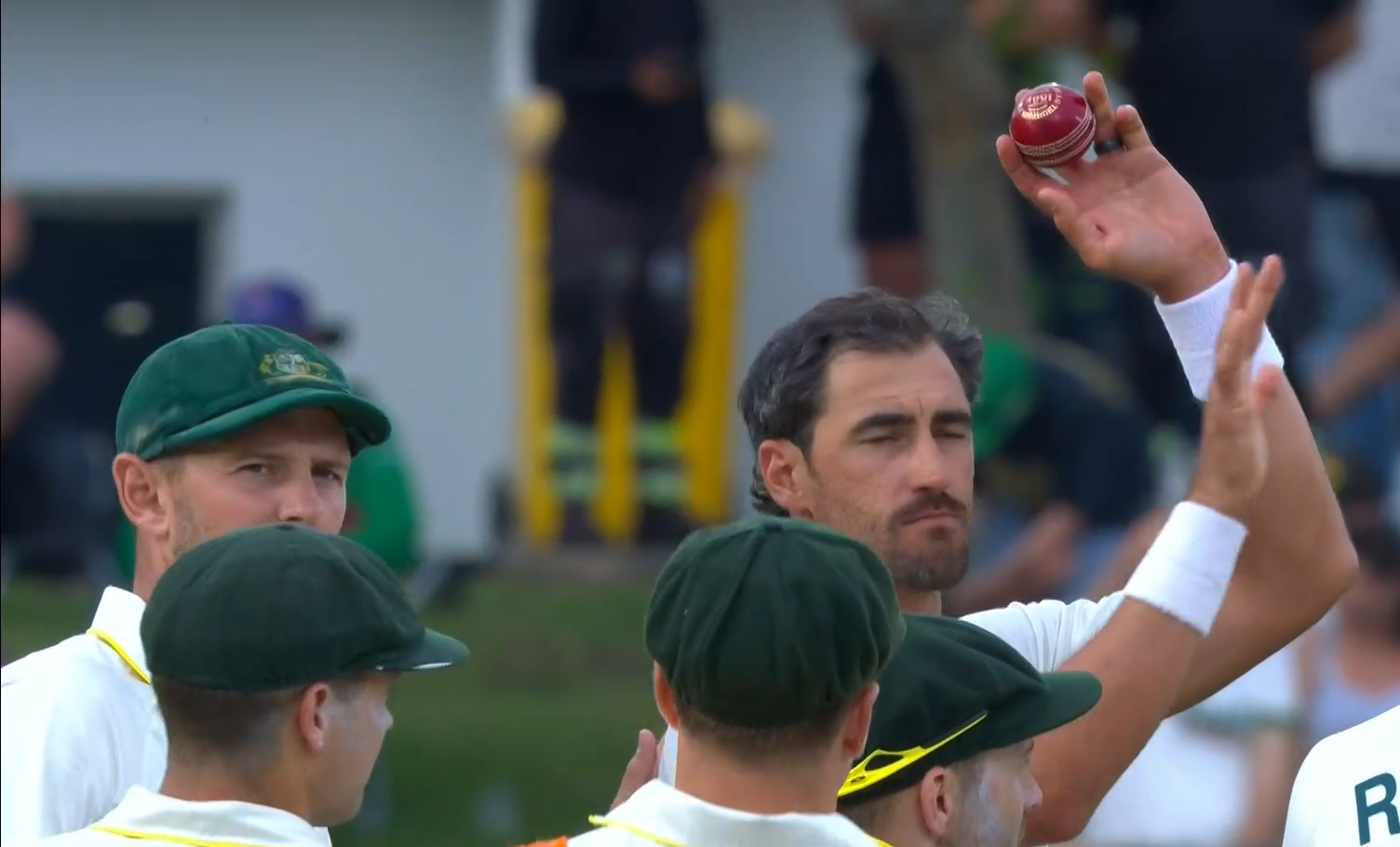
Mitchell Starc, the erstwhile best bowler in the world, and a man who has spent much of his career reminding people of his greatness just as they begin to take it for granted, produced a spell of bowling that was magnificent, magical and majestic in equal measure.
With the second new ball available, Starc did what the great fast bowlers do. He recognised the moment, understood what was at stake, and delivered something that fundamentally changed the complexion of the match.
First came Rickelton, trapped in front by a full delivery that swung late and left him with precious little chance. Then Jansen, beaten by a beautiful inswinging yorker that crashed into his stumps.
In the space of a single over, the two batsmen who had spent the best part of the afternoon rebuilding South Africa’s innings were back in the pavilion.
Starc wasn’t finished.
Gerald Coetzee was bowled, Kagiso Rabada trapped LBW, and South Africa were all out for 329. Four wickets for just two runs with the second new ball, and final figures of 6/72.
It was an extraordinary passage of fast bowling, made all the more remarkable by the fact that South Africa had appeared to be in complete control barely fifteen minutes earlier.
There is something uniquely captivating about watching a truly great fast bowler at the height of his powers. Unlike a batsman, who generally needs time to build an innings, a fast bowler can change the course of a Test match in the space of six deliveries. Years of planning, hours of concentration, and an entire afternoon of hard work can be undone before the opposition has had time to properly process what is happening.
That’s precisely what Starc did.
And in doing so, he turned what had been threatening to become South Africa’s day into something much more difficult to call.
The scorecard makes for extraordinary reading. South Africa went from 203/1 to 232/6, recovered to 325/6, and were then dismissed for 329. Three enormous swings of momentum in the space of a single afternoon, each one seemingly more dramatic than the last.
What made it particularly compelling was that none of these passages of play felt entirely disconnected from the quality of the teams involved.
South Africa’s opening partnership showed what happens when gifted batsmen are prepared to take on a world-class attack. Australia’s middle-session resurgence demonstrated the value of experience, tactical adjustment, and the ability to create wickets when conditions aren’t necessarily in your favour. Jansen and Rickelton’s recovery showed the depth and resilience that has come to define this South African side.
And Starc’s final spell was a reminder that, sometimes, all the tactical analysis in the world is rendered irrelevant by a truly exceptional cricketer producing something extraordinary.
That, ultimately, was what made the day so absorbing.
Neither side could make its superiority last. Every time one team appeared to have landed the decisive blow, the other found a way to respond. And not always through perfect cricket. There were poor decisions, missed opportunities, and moments when both sides appeared to be doing their level best to throw away a position of dominance.
But perhaps that was part of the appeal.
Sport, after all, is not simply about watching exceptional people perform exceptional things. It’s about watching them respond when circumstances cease to favour them, when their original plans fail, and when the opposition refuses to behave as expected.
And yesterday, both teams were repeatedly asked those questions.
The most remarkable thing is that, after all that, I’m still not entirely sure who won the day.
South Africa will understandably be disappointed. Having been 158/0, and later 325/6, they will feel they left a substantial number of runs out there. Ackerman himself acknowledged as much afterwards, admitting that 329 was probably a total they would have accepted before play, but that they had nevertheless missed an opportunity.
Australia, meanwhile, will feel they rescued something from a potentially disastrous situation. At lunch, Cummins’s decision to bowl first was looking like the sort of mistake that might haunt a captain for the rest of the series. By stumps, his side had dismissed South Africa for a total that, on a good batting surface, would ordinarily be considered manageable.
But this might not remain a good batting surface.
There were already signs of the ball keeping low as the afternoon progressed, and the groundsman had acknowledged the crumbly nature of the surface beneath. If the wicket deteriorates as the match progresses, 329 could prove to be a formidable first-innings total. It might even be a winning one.
And that adds another layer to an already fascinating contest. Australia may have had the final word with the ball, but they must now face an attack featuring Rabada, Jansen and Coetzee, on a surface that might become increasingly difficult to bat on.
It’s entirely possible that by the end of day two, we’ll look back on South Africa’s 329 rather differently.
Which, to me, is one of the great attractions of Test cricket. The value of a performance isn’t always immediately apparent. A total that appears inadequate on Tuesday can look match-winning by Thursday. A spell of bowling that seems decisive in the moment can be rendered little more than a footnote by what follows.
The game is constantly asking us to reassess what we’ve just seen.
I’ve always maintained that Test cricket is my favourite format of the game, although I’ll readily concede that its advocates, myself included, can sometimes be guilty of being a little too self-reverential.
Not every session of Test cricket is a fascinating chess match. Not every passage of attritional cricket represents some higher level of sporting intelligence. And not every low-scoring match is automatically a classic simply because the ball dominated the bat.
Sometimes, frankly, Test cricket is boring. Sometimes it’s poorly played. And sometimes the insistence that people ought to appreciate it feels more like an appeal to tradition than a compelling argument about the entertainment on offer.
But days like yesterday make that argument better than any romantic defence of the format ever could.
On a Tuesday afternoon, with the sun shining, Table Mountain providing one of the great backdrops in world sport, and a near-packed Newlands watching on, two of the finest cricket teams on the planet produced a contest worthy of their reputations.
There was aggression, patience, tactical ingenuity, moments of genuine brilliance and others of almost inexplicable carelessness. There were established greats demonstrating precisely why they had earned their reputations, and younger players suggesting that they might one day command the same reverence.
Above all, there was the sense that nothing could be taken for granted.
Every wicket seemed to change the complexion of the game. Every partnership appeared capable of becoming decisive. And every time one side looked to have imposed itself on the contest, the other found a way to remind us that they were rather good at this cricket thing too.
This was not Test cricket being great because of its history, its traditions, or the almost religious reverence with which its most devoted supporters speak about it.
It was Test cricket being great on its own merits.
There was no need to explain the subtleties of the format, or lecture anyone about the virtue of patience, or insist that they were witnessing something uniquely sophisticated. The spectacle spoke for itself.
For one glorious day, in front of a packed crowd on a Tuesday, with Table Mountain watching over proceedings, the two best sides in the world traded blows like heavyweights.
And Test cricket showed, rather than told us, why at its best it remains the king of games.
I don’t know what day two holds. Frankly, I’m not sure it can possibly live up to day one.
But I can’t wait to find out.


Leave a Reply