
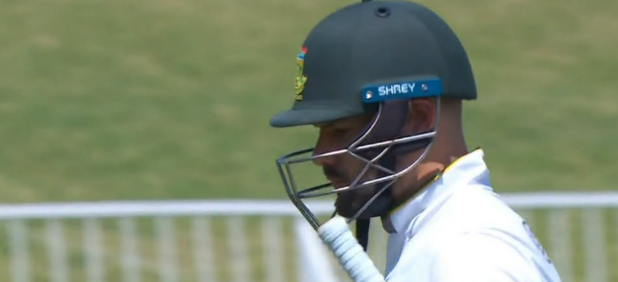
They say a week is a long time in politics, and it does tend to be. In cricket, a year might as well be an age.
Before this Australian series when South Africa were last seen, they’d just had possibly the greatest year of Test cricket in South African history. An eleven-match winning streak included a World Test Championship victory over Australia and a 5–1 run in Asia, which itself included a series whitewash in India—their first victory in cricket’s final frontier since 2000. Seven wins in eight Tests was the return for the Proteas last year, and overall, since the nadir of a series punt in New Zealand where they sent anyone not attached to the SA20, South Africa had won six of seven series and 13 of 15 Tests: their best-ever 15-Test frame. Some were even asking if this was the greatest South African team of all time, a clock where the collective sum of the parts ticked far more efficiently than earlier iterations that maybe had fancier, better-oiled parts.
But that was a year ago. Today, the Proteas wake up 97/5 against Australia, a rampant Australian side that has shown no let-up in this much-hyped series. South Africa have still yet to have a batter reach fifty two-and-a-half innings in, and the batting lineup, which seemed to have turned a corner last year, has reverted to factory settings: over-reliant on Temba Bavuma and Aiden Markram to score runs. 18 Test tons in 15 matches showed batting capability, while nine distinct centurions proved versatility, and the fact that anyone could stand up and be counted:
| Batter | Matches | Runs | Average | Centuries |
| Senuran Muthusamy | 5 | 283 | 94.33 | 1 |
| Wiaan Mulder | 12 | 927 | 66.21 | 3 |
| Corbin Bosch | 4 | 245 | 61.25 | 1 |
| Temba Bavuma | 9 | 813 | 54.20 | 2 |
| Ryan Rickelton | 11 | 732 | 43.05 | 2 |
| Kyle Verreynne | 15 | 666 | 35.05 | 3 |
Now, South Africa look like a shell of the marauders we knew last year.
You can’t even blame it on an easy fixture list because they beat Bangladesh 2–0 in Bangladesh; the very same Bangladesh that drew a series against Australia down under. They beat Australia by five wickets in Cricket’s Greatest Test, the World Test Championship final, to stand alone as the kings of the five-day format.
So what’s changed? Well to be blunt, it’s been a year. If a rolling stone gathers no moss, a standing stone is weighed down terribly by it.
To be clear, I don’t think South Africa are as bad as they’ve shown over the first seven days of this series. They’ve lost both tosses, and the toss in Gqeberha especially looks like a really bad one to have lost. But more importantly, we’ve seen this movie play out before. Just under two months ago, Australia showed up to play Bangladesh at home and had an almighty struggle against the Tigers. Australia drew that series 1–1, with two shocking batting performances where they were skittled for 198 and 210 against a team that hadn’t even played Test cricket in Australia in two decades (which is its own issue, but anyway).
You don’t get better at Test cricket by not playing Test cricket, and the rust has shown. In fact, I’d go so far as to say the Proteas have gone out of their way to be even rustier than you’d think. Aiden Markram hadn’t played a single red-ball game since the India series; Ryan Rickelton had played just the one. That was the opening partnership being asked to set the tone for the series. Temba Bavuma hadn’t played any first-class cricket at all since India, and neither had Tristan Stubbs. David Bedingham, to his credit, has been on an absolute heater in County Cricket, and maybe that showed somewhat with his pair of 40s. But essentially, one year on from the India series victory, the Proteas had their batting unit on T20 holidays.
And it’s not just that they were in T20 mode; look at the stats. Temba Bavuma and Matthew Breetzke are the only players who’ve batted for South Africa this series who have ever scored an ODI century. Literally no one has been batting big, or even trying to, for an entire year. Now they’ve had to show up against possibly the greatest pace attack in cricket history and do a job. If Australia couldn’t shake off the cobwebs against an honest, limited Bangladesh team having won the toss both times, the reality is the Proteas stood next to no chance of successfully just turning up against Australia.
And that brings me to the second point, my larger point – the Megamind point, so to speak. It feels strangely like Cricket South Africa has set the team up to fail. And if not set up to fail, they’ve treated this Test endeavour with startling indifference. Let’s count the ways, shall we?
Firstly, the schedule is the schedule; not much could have been done about the 2025/26 international calendar. South Africa had England and Australia in their World Test Championship lot, and both teams were engaged in the Ashes. Time was once when South Africa and Australia would do battle immediately after, as was the case in 2014 and 2018, but a T20 World Cup year meant there was simply no space in the calendar – and to be fair to Australia, following up the Ashes with a tour to South Africa is brutal. Even so, there’s really no reason South Africa couldn’t have arranged a quick series or even an informal first-class fixture against Zimbabwe across the border. Sure, it’s an expense, but a three-day red-ball match with no DRS isn’t breaking the bank compared to walking into a heavyweight series entirely blind.
Secondly, the organisation of this series has felt shambolic. Giving Durban a Test outside of the December holidays is a recipe for disaster. It’s a less-than-stellar idea during the break anyway, but at Boxing Day you at least have holidaymakers down at the coast who might want to catch a day’s cricket, plus the summer solstice gives you your best shot at maximizing daylight because that’s how meteorology works.
The scheduling for the remaining Tests has been no less shambolic. Starting a Test in Gqeberha on a Sunday is an administrative own goal. Beyond the sheer absurdity of pushing days two through five deep into the work week, doing so in the Eastern Cape ignores local economic reality entirely. Gqeberha carries an unemployment rate of nearly 34%, inside a province where joblessness pushes 47%. Expecting the fraction of the city that is actually employed to skip work on Monday and Tuesday to fill St George’s Park isn’t just unrealistic, it’s tone-deaf.
Which brings us to Cape Town. The Newlands Test starts on a Tuesday? What on earth? Four days of a marquee Test match tucked into the working week? It may very well draw a crowd on prestige alone, but this screams of an itinerary where CSA simply asked: what is the bare minimum turnaround time we can get away with between Tests? Answer: cram them together to save on hotel bills, because the host board is on the hook for the touring party’s accommodation.
Cricket South Africa had previously reported that they expected to break even or make a slight profit from this summer slate, but reduced broadcast rights fees have forced them to forecast a loss. It feels like the moment that deficit showed up on the spreadsheet, they sacrificed the public’s enjoyment of what is traditionally the most coveted series on the South African sports calendar. With ODI cricket dying a slow and very painful death, Test cricket remains the true barometer for the overall health of the sport. If you don’t show the paying public that you take your premier product seriously, CSA will soon act shocked when the public stops taking it seriously too. They already received a warning shot when the domestic season opened in front of empty plastic seats at Kingsmead for an ODI. Treat your flagship product with open disdain for long enough, and don’t be surprised when your supporters follow suit.


Leave a Reply